
The Importance of Coding in Modern Classrooms and Future Careers

In today’s fast-moving digital world, coding is no longer just a skill for software engineers—it’s becoming a core part of learning for students of all ages. Coding is not limited to creating software, but since all of our departments kike healthcare, industry, education, and agriculture, are using computer programs, understanding coding is necessary for running software.
This shift isn’t just about teaching kids how to type commands on a computer. It’s about helping them build the mindset to read code and figure out how a command works, troubleshoot software, and put a prewritten script into a program. That’s why coding education has become a significant focus in modern classrooms.
Why Coding Matters in Today’s Classrooms
One of the biggest reasons coding is gaining importance in technical learning is that it helps students strengthen essential life skills. When students learn to code, they’re not simply following steps—they’re learning how to think logically and creatively. Coding teaches them to break big problems into smaller pieces, experiment without fear of failure, and keep trying until something works. These skills go far beyond computer science and can be applied to real-life situations.
Modern classrooms also use coding to spark curiosity. When students see their ideas come to life on a screen—whether it’s a game, animation, or simple website—they feel empowered. With hands-on experience, students learn fast and are more confident in their learning and more curious about STEM (Science, Technology, Engineering, and Mathematics), which continues to grow in demand.
Another key benefit is inclusivity. Learning in coding is adaptive and flexible, allowing children with different abilities to interact, think critically, or design. Visual learners, analytical thinkers, and creative minds can all exhibit their skills in coding. Because of this flexibility, coding has become an essential tool for creating more inclusive learning environments.
How Coding Supports Future Careers
The rapid digitalisation of every sector in the modern world means that people with digital skills have more career options. There is a need for coding knowledge across almost every department, as nearly every sector runs software, whether it’s health, education, agriculture, industry, or fashion.
Knowledge of AI and coding is becoming essential for job seekers, as the technology is not confined to a single department. Our designers, marketing team, data analysts, and communication staff all need to develop digital skills to keep pace with the modernisation of the workplace.
At the professional level, employers want to hire candidates who can problem-solve, adapt, and understand technology. Coding helps students build these abilities. Even if a student doesn’t become a software developer, knowing how to code gives them a deeper understanding of the tools they will use in almost any career.
Tech-related jobs are also some of the fastest-growing in the country. Careers in cybersecurity, artificial intelligence, app development, data analysis, and robotics are expanding every year. Students with coding knowledge have an edge when applying for jobs in digital fields, as they not only know the material but also know how to use it.
Real-World Benefits Beyond Technology
Coding is now seen not only as a digital skill but also as a way to enhance students’ abilities, such as critical thinking, problem-solving, and communication, which are necessary in almost every field.
Coding also boosts creativity as they get a chance to design from scratch. It also improves communication skills because students must explain their thinking clearly to solve programming challenges.
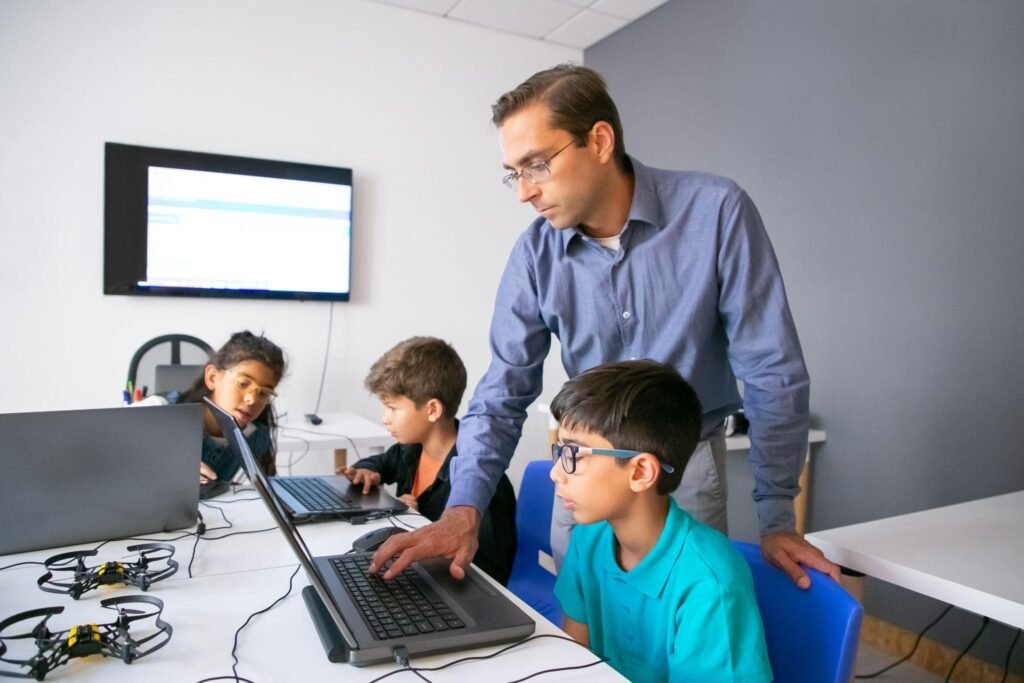
Classrooms that integrate coding often see increased student engagement, especially among kids who may not thrive in traditional subjects. Since coding is more practical, students find it more fun and treat it like solving a puzzle. They enjoy collaborating and interacting with their classmates, and hence learning becomes easier.
Additionally, coding projects are primarily introduced as group projects to help students learn to collaborate and share ideas, preparing them for the future. In classrooms, students work on coding projects, brainstorm ideas, test solutions, and troubleshoot together. These collaborations mirror real-world workplace environments where employees rely on communication and cooperation to complete tasks.
How Schools Are Bringing Coding Into the Classroom
Students at school are not getting coding assignments as part of their science or math projects. They are using platforms like Scratch, Code.org, robotics kits, and Python to learn coding and implement it in small projects. Many schools are not treating it as a separate subject, but rather incorporating it into science, maths, or even art lessons for graphic design. Some schools host coding clubs or after-school programs to give students extra opportunities to explore technology in a fun, low-pressure setting.
This integration is helping students of all backgrounds gain exposure to the digital world. As coding becomes more common in education, students will feel better prepared for higher-level learning and future career paths.
The Future of Coding in Education
In today’s world, we can’t see coding as just a trend- it’s actually becoming more of a basic need for carrying out our daily tasks at work. As automation, artificial intelligence, and digital tools continue to advance, students who understand coding will have a significant advantage. Coding sparks curiosity, encourages students to solve problems, and prepares their growing minds to adapt to new technologies, making them future-ready.
Coding in modern classrooms isn’t about turning every student into a programmer. It’s about giving them the right skills to prepare them for opportunities and jobs yet to come.
FAQs (Frequently Asked Questions)
1. Does coding need a strong command of maths?
No. Coding requires more brainpower for storage and critical thinking than solving simple calculations. A person needs to think, plan, and execute all of this. No, it’s not possible. Although coding requires some calculation, that’s not the primary requirement.
2. How does coding help students who don’t want a tech career?
Even if a student doesn’t plan to become a software developer, coding teaches skills they’ll use anywhere—critical thinking, creativity, teamwork, and understanding digital tools. These abilities are valuable across fields such as marketing, healthcare, business, design, education, and more.
3. Is coding complex for younger children to learn?
Coding is even more interesting for your children. Young minds are sharper and eager to learn, solve puzzles, and think critically. There are fun ways to introduce coding to children using platforms like Scratch or Code.org, where students learn through games, animations, and colourful blocks rather than complex code.
4. Can coding improve problem-solving skills?
Yes, absolutely. Coding teaches students to break big problems into smaller steps, test their ideas, fix mistakes, and try again. These problem-solving habits carry over into real-life situations and help students become more confident thinkers.
5. How are schools teaching coding today?
Many schools now blend coding into subjects like science, math, and art. Students are using platforms like Scratch, Code.org, robotics kits, and Python to learn coding and implement it in small projects. Many schools are not treating it as a separate subject, but rather incorporating it into science, maths, or even art lessons for graphic design.
6. Do we need a lot of money to learn coding?
Not necessarily. There are free platforms like Scratch, Tynker and Code.org. Many schools use these free platforms—there are many ways to teach students coding cost-effectively.
7. Will coding still matter in the future, with AI growing so fast?
Yes—more than ever. As AI and automation continue to evolve, understanding coding helps students know how these tools work. Using coding, one can customise an AI tool’s performance and achieve better results. Even basic coding knowledge builds confidence in their skills and helps them get jobs.